Resilience is one of the most admired human qualities. It’s the ability to endure hardship, recover from setbacks, and continue growing after difficult moments.
Across history, people have expressed this idea through powerful imagery. From mythological creatures to plants that bend without breaking, cultures worldwide created visual reminders of endurance and renewal. Today, many of these symbols appear in tattoos, art, jewelry, therapy language, and social media.
This guide explores 21 Symbols of Resilience in Cultures and Arts Around The World, explaining their origins, deeper meanings, and how people in the United States interpret them today.
While these symbols come from different traditions, they often share a common message: even after destruction, renewal is possible.
Quick Answer
21 Symbols of Resilience in Cultures and Arts Around The World represent endurance, renewal, and inner strength. In the United States today, people often associate these symbols with personal recovery, mental health awareness, and the idea that growth can follow hardship.
TL;DR
• Resilience symbols appear in mythology, religion, and nature imagery
• Many come from ancient traditions long before modern psychology
• Americans often use them in tattoos and motivational art
• Common themes include rebirth, persistence, and transformation
• Meanings evolve as symbols move between cultures
What Are Symbols of Resilience?
Symbols of resilience are images, plants, animals, or artistic motifs that represent endurance through adversity. They visually express the ability to recover, rebuild, or grow stronger after hardship.
In many cultures, resilience appears through nature. Plants that survive harsh weather, animals that regenerate, or mythical creatures reborn from destruction become powerful metaphors.
Why These Symbols Matter Today
In modern American culture, resilience symbols often appear in:
• Mental health advocacy
• Recovery and sobriety communities
• Memorial tattoos
• Motivational artwork
• Personal growth discussions
• Therapy and self-help spaces
Because of this, ancient symbols now carry deeply personal meanings for many people.
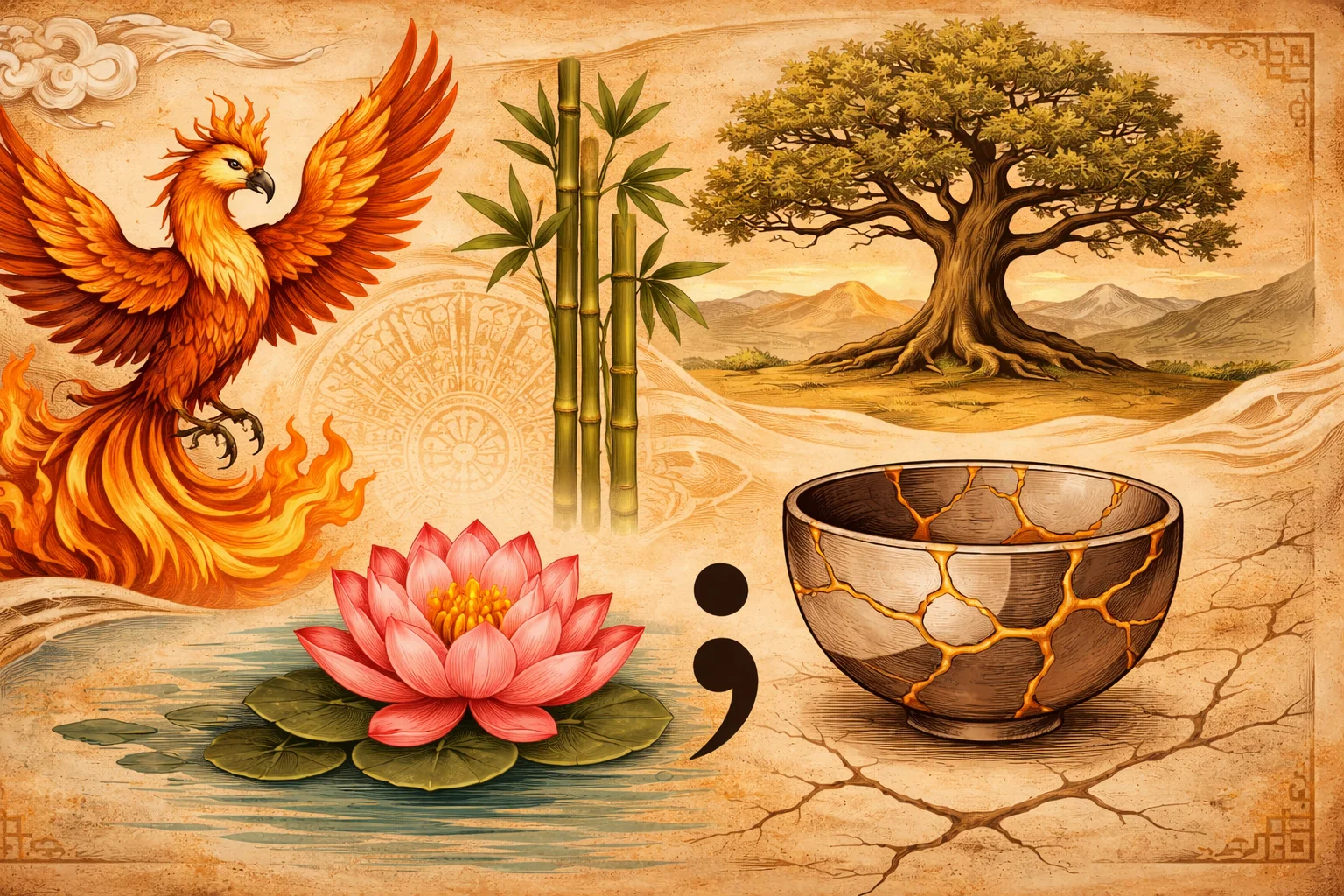
The Phoenix: Rebirth After Destruction
Few images capture resilience more clearly than the phoenix.
Ancient Origins
The phoenix appears in ancient Egyptian, Greek, and later Roman mythology. According to legend, the bird lives for centuries before burning and rising again from its own ashes.
Symbolic Meaning
The phoenix represents dramatic renewal and transformation.
• Rebirth after catastrophe
• Rising stronger after loss
• Spiritual renewal
• Transformation through struggle
In the United States, the phoenix often appears in tattoos symbolizing surviving trauma, illness, or major life change.
The Lotus Flower: Rising From the Mud
The lotus flower grows in muddy water yet blooms clean and beautiful above the surface.
Spiritual and Cultural Roots
The symbol appears widely in Asian spiritual traditions, including Buddhism and Hinduism. In these traditions, the lotus represents enlightenment emerging from suffering.
Modern Meaning
Today the lotus is widely associated with personal growth.
• Beauty emerging from hardship
• Spiritual awakening
• Emotional healing
• Inner strength
Many Americans choose lotus tattoos to represent overcoming difficult life chapters.
Bamboo: Strength Through Flexibility
Bamboo is a powerful symbol across East Asian traditions.
Unlike rigid trees, bamboo bends with strong winds rather than breaking.
Core Symbolism
• Adaptability during adversity
• Quiet strength
• Persistence over time
• Humility and endurance
In modern design, bamboo imagery often appears in wellness spaces and minimalist decor to evoke calm resilience.
The Oak Tree: Steadfast Strength
The oak tree has symbolized endurance in many European traditions.
Because it grows slowly yet becomes incredibly strong, the oak represents stability through time.
Symbolic Associations
• Deep roots and lasting strength
• Protection and endurance
• Wisdom gained through age
• Courage during hardship
In American culture, oak imagery appears in military symbolism and leadership metaphors.
Kintsugi: Beauty in Brokenness
Kintsugi is a Japanese art form that repairs broken pottery using lacquer mixed with gold.
Instead of hiding cracks, the technique highlights them.
Meaning Behind the Art
Kintsugi teaches that damage is part of an object’s story.
• Imperfection as beauty
• Healing without erasing scars
• Growth through breakage
• Acceptance of past pain
In the United States, the idea became popular in therapy circles and recovery communities.
The Semicolon: A Modern Symbol of Survival
Unlike many ancient symbols, the semicolon is a modern resilience icon.
Origins of the Movement
The semicolon gained attention through mental health awareness campaigns in the 2010s.
In writing, a semicolon connects two related sentences instead of ending them.
Symbolic Meaning
The metaphor is simple but powerful: a life story continues.
• Choosing to continue living
• Survival after suicidal thoughts
• Mental health awareness
• Personal resilience
Semicolon tattoos remain one of the most widely recognized resilience symbols in America.
The Japanese Daruma Doll
Daruma dolls represent persistence in Japanese culture.
The round dolls are traditionally sold with blank eyes.
Cultural Tradition
A person fills in one eye when setting a goal. The second eye is filled once the goal is achieved.
Symbolic Meaning
• Determination despite setbacks
• Persistence toward goals
• Self-discipline
• Faith in eventual success
Today, Daruma dolls are used in both spiritual practice and motivational decoration.
Also Read This: Butterfly Symbolism: Spiritual Meaning Behind the Animal
The Celtic Knot: Eternal Continuity
Celtic knots appear in ancient European artwork and manuscripts.
Their endless loops symbolize continuity and interconnectedness.
Core Meaning
• Life cycles without beginning or end
• Persistence through time
• Eternal connection
• Spiritual resilience
In the U.S., Celtic knot tattoos often symbolize heritage and enduring strength.
The Butterfly: Transformation Through Change
The butterfly’s life cycle makes it a universal transformation symbol.
From caterpillar to chrysalis to winged insect, its life represents dramatic change.
Emotional Symbolism
• Personal transformation
• Freedom after struggle
• Renewal and hope
• Embracing change
Because of this, butterflies appear frequently in grief tattoos and recovery symbolism.
The Anchor: Stability in Rough Waters
Historically, sailors depended on anchors to stabilize ships during storms.
This practical tool gradually became a metaphor.
Symbolic Associations
• Staying grounded during chaos
• Hope during uncertainty
• Loyalty and steadfastness
• Emotional stability
Anchor tattoos became popular among American sailors in the 19th century and remain common today.
The Dragon: Power and Endurance
Dragons appear across many mythologies.
However, meanings vary widely depending on culture.
Eastern vs Western Meanings
• East Asia: wisdom, power, balance with nature
• Medieval Europe: danger, chaos, heroic conquest
In modern Western symbolism, dragons often represent inner power and resilience.
Table: Resilience Symbols and Their Meanings
| Symbol | Cultural Origin | Meaning in the USA | Common Associations |
| Phoenix | Greek/Egyptian myth | Personal rebirth | Overcoming trauma |
| Lotus | Asian spiritual traditions | Growth after hardship | Meditation and healing |
| Bamboo | East Asian philosophy | Flexible strength | Wellness culture |
| Oak Tree | European folklore | Enduring stability | Leadership and courage |
| Semicolon | Modern mental health movement | Survival and continuation | Awareness tattoos |
Psychological Meaning of Resilience Symbols
Symbols help people process emotional experiences.
They transform abstract feelings into visible reminders.
Why People Use Symbolic Imagery
Psychologists often note that symbolic imagery can support identity and healing.
Common psychological roles include:
• Visual reminder of personal growth
• Expression of survival after trauma
• Sense of belonging to a shared story
• Motivation during difficult periods
• Emotional processing through art
Because of this, many resilience symbols appear in therapy discussions and recovery groups.
Modern Usage in Tattoos, Art, and Social Media
Today, resilience symbols appear across many aspects of daily life.
Popular Modern Uses
• Tattoo designs representing survival or transformation
• Jewelry with symbolic motifs
• Motivational posters and wall art
• Social media posts during life transitions
• Mental health awareness campaigns
In particular, platforms like Instagram and TikTok helped spread visual symbolism related to healing and growth.
Misunderstandings and Cultural Sensitivities
While symbols travel across cultures, their meanings can shift.
Sometimes this creates confusion or controversy.
Important Considerations
• Some symbols have sacred origins
• Cultural context may change interpretation
• Commercial use can simplify deeper traditions
• Meanings may differ across cultures
Respectful understanding helps preserve the cultural depth behind these images.
How Symbol Meanings Change Over Time
Symbols rarely stay fixed.
As societies evolve, meanings adapt to new experiences.
For example:
• Ancient religious symbols may become motivational icons
• Cultural art motifs may enter global design trends
• Personal identity movements may adopt old imagery
Because of this, the same symbol can hold different meanings across generations.
FAQs
What is the most universal symbol of resilience?
The phoenix is often considered the most universal resilience symbol because it represents rebirth after destruction.
Why do people use resilience symbols in tattoos?
Tattoos provide a permanent reminder of survival, personal growth, or life transformation.
Are resilience symbols tied to religion?
Some originate in religious traditions, but many now have broader cultural meanings.
Is the semicolon a resilience symbol?
Yes. The semicolon represents choosing to continue one’s life story despite hardship.
Do symbols mean the same thing in every culture?
No. Symbols often carry different meanings depending on cultural or historical context.
Can modern movements create new symbols?
Yes. The semicolon symbol shows how new social movements can create powerful imagery.
Conclusion
Throughout history, people have used imagery to express their deepest values and struggles. The 21 Symbols of Resilience in Cultures and Arts Around The World show how powerful these visual metaphors can be.
From the phoenix rising from ashes to the lotus blooming in muddy water, these symbols remind us that hardship does not end the story. Instead, many traditions teach that growth often emerges from struggle.
Today in the United States, these symbols continue evolving. They appear in tattoos, art, therapy spaces, and everyday conversations about healing. Their message remains timeless: resilience is not just survival, but transformation.