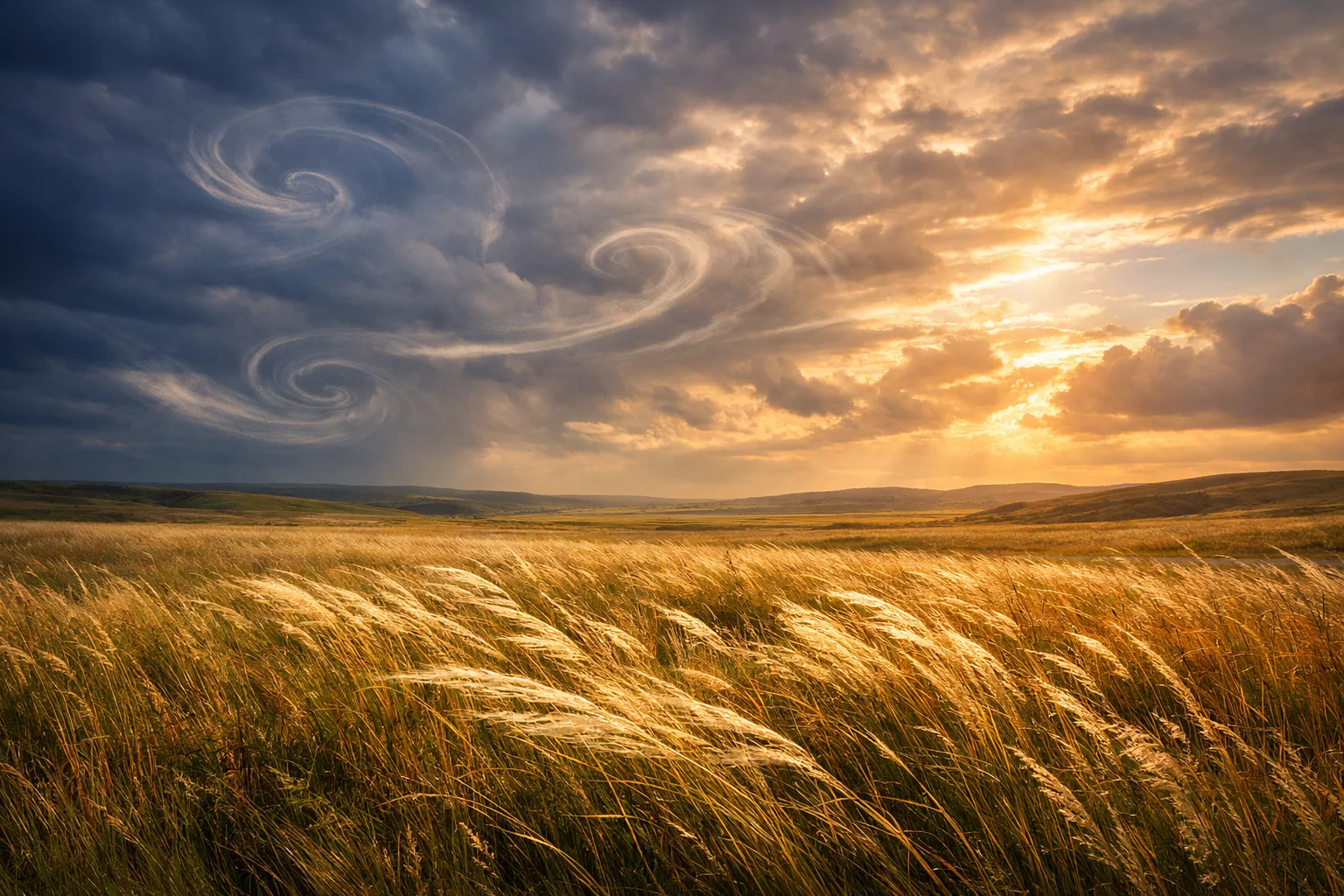
Wind has no color, no shape, and no fixed form. Yet it moves oceans, bends forests, and changes history. Wind Symbolism Meaning and Interpretation explores how something invisible can carry such deep emotional and cultural weight.
In the United States, wind often represents freedom, movement, and personal change. At the same time, it can signal danger, divine presence, or powerful transformation. Because wind can’t be seen but can be felt, it often symbolizes unseen forces in our lives—belief, spirit, fate, and even emotion.
Today, wind imagery appears in tattoos, poetry, movies, spiritual practices, and even weather talk. But its meaning stretches back thousands of years. Let’s explore what wind really symbolizes—and why it still matters.
Quick Answer
Wind Symbolism Meaning and Interpretation in the United States most often represents freedom, change, and invisible power. It can also symbolize spiritual presence, emotional shifts, or life transitions. Across cultures, wind reflects breath, spirit, and forces beyond human control.
TL;DR
• Wind symbolizes freedom and personal independence.
• It represents change and life transitions.
• In the U.S., it connects to frontier identity.
• Spiritually, wind often symbolizes breath or soul.
• It can signal both renewal and destruction.
• Modern use includes tattoos and poetic imagery.
What Is Wind Symbolism?
Wind symbolism centers on something invisible but deeply felt. Unlike fire or water, wind has no stable form. Instead, it’s movement itself.
For American readers, this matters because wind shapes landscapes across the country—from Midwest plains to Atlantic coasts. As a result, it naturally became part of national storytelling.
How Wind Appears in Symbolic Form
Wind isn’t drawn directly. Instead, artists and writers show it through effects:
• Trees bending or leaves swirling
• Hair or clothing blowing sideways
• Flags stretched in motion
• Clouds racing across the sky
• Dust rising from open land
Because wind has no fixed shape, it often represents freedom from limits. It refuses to stay still.
Core Meanings of Wind at a Glance
Across American culture, wind usually carries three major symbolic themes.
Freedom and Independence
The open wind across the prairie reflects self-reliance. It connects strongly to frontier mythology and westward expansion.
Change and Transition
A “wind of change” suggests something new arriving. It can signal opportunity or uncertainty.
Invisible Power
Wind reminds us that unseen forces shape life. We cannot control it, yet we feel its impact.
Historical Roots of Wind Symbolism
Wind symbolism is ancient. Long before modern science explained air currents, people saw wind as sacred or divine.
Ancient Civilizations
In ancient Greece, wind was personified through gods like Aeolus. In many early cultures, wind represented divine breath.
Similarly, in Hebrew tradition, the word “ruach” means both wind and spirit. In Latin, “spiritus” also means breath. These overlaps shaped Western symbolism.
Indigenous North American Traditions
Many Native American traditions view wind as a living force.
• Messenger between worlds
• Carrier of ancestral voices
• Directional spiritual guide
• Force of cleansing storms
Because wind travels everywhere, it became linked to spiritual connection.
Wind Symbolism in the United States
In the U.S., wind symbolism blends nature, history, and identity.
The American landscape plays a huge role. Wide-open plains in states like Kansas and Oklahoma made wind part of daily life. It shaped farming, migration, and even disaster history.
The Frontier Spirit
Wind across open land came to symbolize:
• Freedom from old constraints
• Courage to move west
• Risk and opportunity
• Personal independence
The image of a lone traveler facing strong wind became a metaphor for resilience.
The Dust Bowl Era
During the 1930s Dust Bowl, wind took on darker meaning.
It symbolized:
• Economic hardship
• Environmental warning
• Human vulnerability
• Forced migration
This shift shows how wind symbolism can change depending on context.
Wind in American Literature and Film
Wind plays a powerful role in storytelling.
Writers often use it to signal emotional or narrative change. A sudden gust can mark a turning point.
Common Literary Uses
• Foreshadowing dramatic events
• Reflecting inner turmoil
• Symbolizing destiny
• Marking spiritual encounters
In film, wind machines heighten tension. Blowing curtains often signal mystery or unseen presence.
Spiritual Meaning of Wind
For many Americans today, wind still carries spiritual symbolism. This meaning often blends Christian, New Age, and Indigenous influences.
Wind as Spirit or Breath
In Christian texts, wind represents the Holy Spirit. It moves invisibly yet powerfully.
In broader spiritual language, wind symbolizes:
• Divine presence
• Awakening or renewal
• Guidance from unseen forces
• Soul energy or life force
Because breath equals life, wind often reflects vitality.
Wind as a Symbol of Change
Change is perhaps wind’s strongest modern meaning.
We use phrases like “winds of change” in politics, culture, and personal growth.
Positive Change
• New beginnings
• Career shifts
• Emotional healing
• Social progress
Uncertain or Harsh Change
• Sudden disruption
• Loss of stability
• Natural disasters
• Unexpected life turns
Wind reminds us that change is constant.
Emotional and Psychological Associations
Psychologically, wind connects to movement and mood.
Gentle breeze feels calming. Strong wind feels chaotic.
Common Emotional Signals
• Light wind → peace and openness
• Strong gusts → tension or urgency
• Storm winds → emotional upheaval
• Warm wind → comfort and nostalgia
Because wind cannot be held, it mirrors fleeting feelings.
Wind Symbolism in Tattoos and Modern Identity
Wind tattoos are often subtle. People rarely tattoo “wind” itself. Instead, they choose images that imply motion.
Popular Wind-Inspired Tattoo Elements
• Feathers drifting in air
• Dandelion seeds blowing away
• Swirling line patterns
• Birds soaring in open sky
• Leaves carried by gusts
These designs usually symbolize freedom or letting go.
In modern identity culture, wind imagery suggests independence and self-expression. It often appears in motivational quotes or social media captions.
Also Read This: Dog With 2 Different Colored Eyes Spiritual Meaning and Symbolism
Cross-Cultural Meanings of Wind
While the U.S. focus is central, wind symbolism appears worldwide.
East Asian Traditions
In Chinese philosophy, wind connects to movement of life energy. It represents flexibility and adaptability.
Japanese Symbolism
Wind often reflects impermanence. Cherry blossoms blowing away symbolize life’s fragility.
African Traditions
In some African spiritual systems, wind carries ancestral voices or divine messages.
Across cultures, wind nearly always relates to spirit and change.
When Wind Symbolism Turns Negative
Although wind often feels positive, it also has darker meanings.
Hurricanes and tornadoes shape American memory. Because of this, wind can symbolize destruction and unpredictability.
Negative Associations
• Chaos and instability
• Loss of control
• Divine judgment
• Environmental crisis
However, even destructive wind often leads to renewal afterward.
Wind Symbolism Over Time
Wind’s meaning has shifted throughout history.
In ancient times, it represented gods. During the Enlightenment, it became a natural force explained by science. In modern America, it balances poetic symbolism with meteorology.
Interestingly, climate discussions in 2025–2026 also influence wind symbolism. Wind power now represents renewable energy and environmental hope.
So today, wind can symbolize:
• Sustainability
• Innovation
• Clean energy progress
• Future-focused thinking
Its meaning keeps evolving.
Wind Symbolism in Everyday American Life
Wind appears in daily language more than we notice.
• “Second wind” for renewed energy
• “Throw caution to the wind” for risk-taking
• “Gone with the wind” for disappearance
• “Three sheets to the wind” for drunkenness
These phrases show how wind represents motion and unpredictability.
Symbolism of Wind by Context
Below is a snapshot of how wind symbolism shifts depending on setting.
| Context | Meaning in the USA | Common Associations | Notes |
| Prairie landscapes | Freedom and openness | Frontier identity | Linked to westward expansion |
| Storm imagery | Chaos and destruction | Hurricanes, tornadoes | Often followed by renewal |
| Spiritual settings | Divine presence | Breath, Holy Spirit | Invisible but powerful force |
| Political speech | Social change | Reform, activism | “Winds of change” phrase |
| Renewable energy | Innovation | Wind turbines | Symbol of sustainability |
This flexibility makes wind one of the most adaptable symbols.
FAQs
What does wind symbolize spiritually?
Spiritually, wind often symbolizes breath, soul, or divine presence. Because it’s invisible yet powerful, it represents unseen guidance.
Is wind a positive or negative symbol?
It can be both. Gentle wind suggests freedom and peace, while storm winds suggest chaos or disruption.
Why is wind linked to change?
Wind constantly moves. Because of that motion, cultures use it to represent life transitions and new beginnings.
What does wind mean in dreams?
In dreams, wind often reflects emotional shifts. Strong wind may signal stress, while light breeze suggests calm change.
How is wind used in American culture?
In the U.S., wind symbolizes independence, frontier life, resilience, and now renewable energy innovation.
Conclusion
Wind surrounds us every day, yet we rarely stop to consider its deeper meaning. Wind Symbolism Meaning and Interpretation shows that this invisible force carries powerful ideas about freedom, change, spirit, and resilience.
In the United States, wind reflects both the open frontier and modern sustainability. It can comfort or challenge us. It can destroy or renew. That dual nature makes it timeless.
Next time you feel the wind on your face, pause for a moment. You might be feeling more than moving air—you might be sensing one of humanity’s oldest and most powerful symbols.