The trident, a three-pronged spear, is more than a weapon. Across centuries, it has symbolized power, authority, and spiritual balance. In the USA, the trident appears in military insignia, pop culture, and tattoos, reflecting both strength and mysticism. Understanding its symbolism helps explain why this ancient icon continues to resonate today.
From mythological roots to modern expression, the trident carries meanings that blend history, culture, and personal identity. Its presence in American society is both visual and symbolic, often tied to the sea, heroism, and spiritual ideals.
Quick Answer
The trident symbolizes power, authority, and connection to spiritual or elemental forces. In the USA, it often represents naval strength and resilience, while globally it also embodies divine protection and balance.
TL;DR
• Represents power, authority, and control over natural forces.
• Ancient roots link it to Poseidon, Shiva, and ocean myths.
• In the USA, it appears in military insignia, logos, and tattoos.
• Cross-cultural meanings include spiritual balance, protection, and divine energy.
• Modern use spans fashion, social media, home decor, and pop culture.
• Controversies are rare but can occur in misuse or political symbolism.
Overview of the Trident Symbol
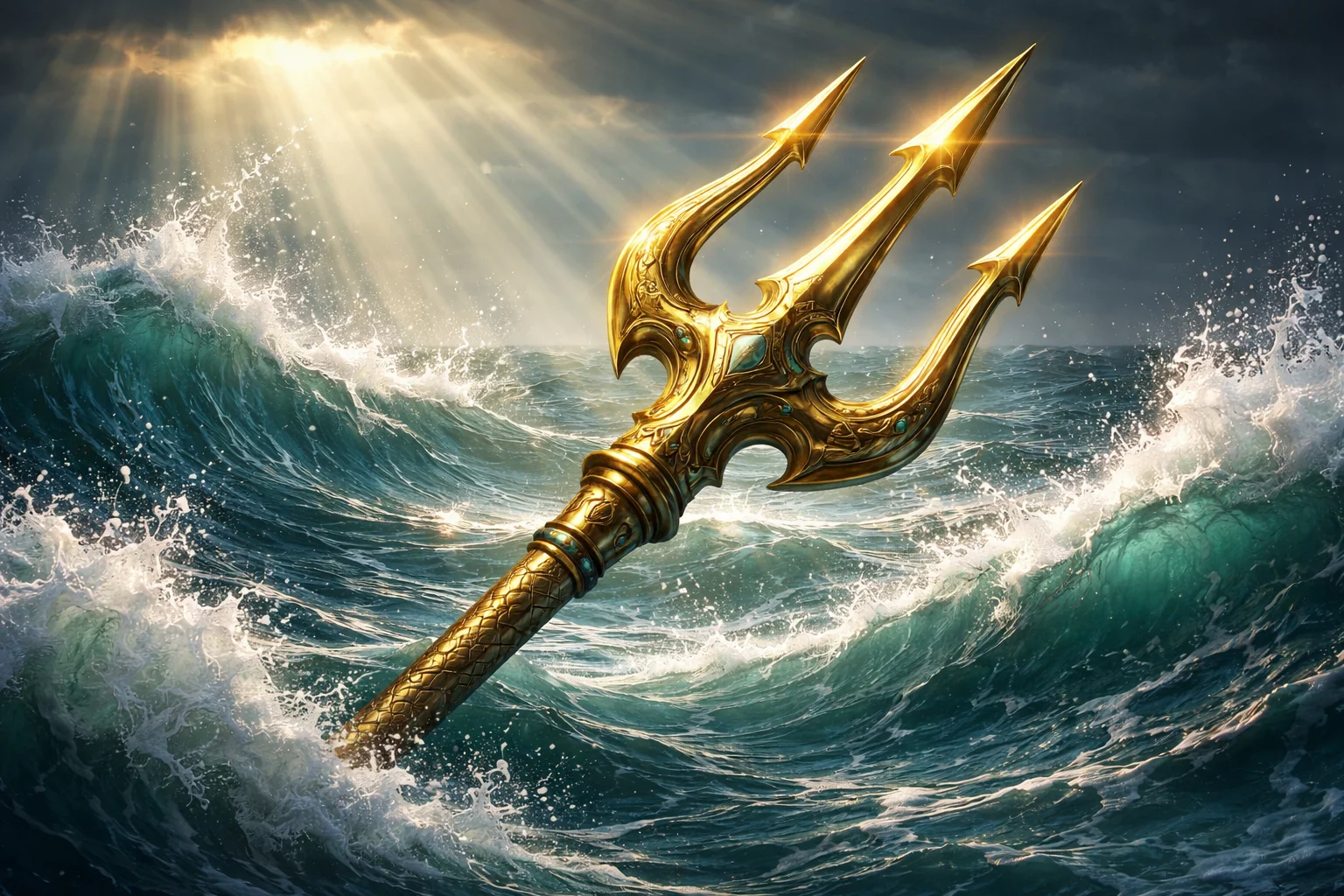
The trident is a spear with three pointed prongs. Its appearance is straightforward but visually striking, often rendered in gold, silver, or dark metals. It can be upright, resting, or held aloft in iconography.
Key Features
• Three prongs symbolize power, unity, or balance.
• Commonly associated with water or sea deities.
• Often depicted as metallic, reflecting strength and durability.
• Used in modern insignia, art, and tattoos for symbolic impact.
The trident’s simplicity allows it to convey authority immediately, making it a versatile symbol both historically and today.
Historical Background
The trident has a rich history spanning multiple civilizations, from ancient Greece to South Asia. Its meaning evolved from practical weapon to sacred symbol.
Ancient Roots
• Greek Mythology: Poseidon, god of the sea, wields a trident to control oceans and storms.
• Roman Influence: Neptune inherited Poseidon’s trident symbolism in art and literature.
• Hindu Tradition: Shiva’s trishula, a trident, represents creation, protection, and destruction.
• Pre-Christian Europe: Three-pronged tools often symbolized triads, a sacred number representing balance and unity.
Over centuries, the trident shifted from a literal weapon to a powerful icon of divine and earthly authority.
Symbolism in the USA
In American culture, the trident conveys authority, military strength, and maritime heritage. Its uses are practical, symbolic, and artistic.
Modern American Associations
• Military and Navy: The U.S. Navy SEALs use the trident in their insignia to represent elite maritime capability.
• Government and Civic Symbols: Some city flags and official seals incorporate tridents.
• Pop Culture: Comic books, movies, and video games often depict heroes or antiheroes wielding tridents.
• Home and Fashion: Jewelry and decor featuring tridents signal strength or connection to water themes.
The trident resonates with Americans as a visual shorthand for courage, resilience, and mastery over challenges.
Cross-Cultural and Spiritual Meanings
Globally, the trident carries spiritual, religious, and elemental significance.
Examples
• Hinduism: Shiva’s trishula represents cosmic balance and the cycle of life, death, and rebirth.
• Buddhism: In some traditions, it symbolizes overcoming ignorance and attachment.
• Greek and Roman Mythology: Control over seas and storms, protection of sailors.
• East Asian Symbolism: Appears in Taoist iconography for harmony and the trinity of heaven, earth, and humanity.
These interpretations enrich its meaning in the USA, where diverse communities honor both heritage and personal symbolism.
Emotional and Psychological Associations
The trident evokes distinct feelings and identity cues:
• Power and Authority: Signals strength and command.
• Protection and Security: Suggests guarding against danger or chaos.
• Balance and Spirituality: Three prongs indicate harmony and control.
• Confidence and Identity: Used in tattoos or decor to reflect personal courage or resilience.
In psychology, it often conveys dominance, mastery over emotions, or connection to elemental forces.
Also Read This: Cockroach Crawling on Me Spiritual Meaning and Symbolism
Modern Usage
The trident appears widely in contemporary American culture:
Tattoos
• Popular among those with maritime, military, or mythological interests.
• Can symbolize personal power, protection, or spiritual balance.
Social Media and Fashion
• Jewelry, clothing, and logos often feature trident motifs.
• Emojis and graphics may incorporate stylized tridents for identity expression.
Home Decor and Holidays
• Nautical-themed rooms, coastal homes, or marine events use trident imagery.
• Appears in themed decorations for summer or ocean-focused celebrations.
Pop Culture
• Superheroes, video game characters, and movies often carry tridents as iconic weapons.
| Context | Meaning in the USA | Common Associations | Notes |
| Navy SEAL Insignia | Elite maritime power | Courage, authority | Symbol of professional honor |
| Tattoos | Personal power or protection | Strength, resilience | Often linked to ocean or myth |
| Pop Culture (Movies, Games) | Heroism and supernatural power | Adventure, fantasy | Reinforces narrative impact |
| Home Decor | Nautical theme | Harmony, balance | Visual connection to water |
| Religious Iconography (Hindu) | Cosmic balance, spiritual insight | Cycle of life, protection | Cross-cultural reverence |
Misunderstandings, Misuse, and Controversies
Though generally positive, trident symbolism can be misinterpreted:
• Political Misuse: Rarely co-opted in extremist symbols, misrepresenting ancient meanings.
• Overgeneralization: Assuming all tridents imply aggression ignores spiritual roots.
• Cultural Appropriation: Using religious tridents purely decoratively can offend some communities.
• Pop Culture Distortion: Films or games may oversimplify spiritual or mythological significance.
Understanding context ensures respect while appreciating the symbol’s depth.
Shifts Over Time
The trident has evolved from weapon to sacred icon to modern emblem:
• Ancient Era: Literal spear for gods and warriors.
• Middle Ages: Represented naval power and protection of ports.
• Modern USA: Symbol of elite forces, identity, and myth-inspired aesthetics.
• Contemporary Spirituality: Adopted in tattoos, fashion, and art as a sign of balance and resilience.
While interpretations vary, its core themes—power, protection, and spirituality—remain consistent.
FAQs
What does the trident represent in American culture?
It represents strength, authority, and naval heritage, often linked to the Navy or heroic imagery.
Is the trident a spiritual symbol?
Yes, in both Hinduism and some ancient European traditions, it conveys divine balance and protection.
Why is the trident used in tattoos?
People choose it for strength, courage, or spiritual harmony, often connected to maritime or mythological themes.
Can the trident have negative meanings?
Rarely, when misused in extremist or politicized contexts, but historically it is mainly positive.
How is the trident depicted in pop culture?
Usually as a powerful weapon, worn by gods, heroes, or fantasy characters, symbolizing control and authority.
Does the number three have significance in the trident?
Yes, three prongs often symbolize balance, the triad of life cycles, or unity of forces.
Conclusion
The trident remains a compelling symbol of power, protection, and spiritual balance. From ancient gods to modern American culture, it conveys strength, resilience, and harmony. Whether appearing in military insignia, tattoos, or home decor, its three-pronged design continues to inspire and evoke meaning. Understanding trident symbolism allows us to appreciate its history and embrace its timeless message of authority, balance, and connection to both earth and sea.