Death is one of the oldest themes in human symbolism. Across cultures and centuries, people created visual signs to represent mortality, loss, and the passage from life to whatever comes next.
Today, many of these images still appear in art, memorial traditions, tattoos, and even everyday design. Some are solemn. Others remind people to live fully. Still others celebrate ancestors and remembrance.
When people search for Symbols of Death Around the World, they usually want to understand where these images came from and what they mean today. In the United States especially, many of these symbols have blended meanings from different cultures, religions, and modern media.
Understanding them reveals something deeper: how societies cope with loss, honor the dead, and make sense of life itself.
Quick Answer
40 Symbols of Death Around the World refers to common visual signs used across cultures to represent mortality, mourning, and the afterlife. In the United States today, symbols like skulls, ravens, hourglasses, and black roses often represent remembrance, life’s fragility, or gothic aesthetics, while their original meanings come from ancient religions, folklore, and cultural traditions.
TL;DR
• Death symbols appear in religion, folklore, and ancient mythologies.
• Many originated thousands of years ago.
• Americans often reinterpret them through art and pop culture.
• Some represent mourning, while others symbolize transformation.
• Modern uses include tattoos, Halloween imagery, and memorial art.
• Meanings can shift depending on culture and context.
Overview of Death Symbols Around the World
Symbols of death exist in nearly every culture. Humans have always used images to explain the unknown, especially the mystery of dying.
While some symbols represent literal death, many actually symbolize transition or rebirth. This reflects a widespread belief that death is not simply an end but a passage.
Why Cultures Create Death Symbols
People developed these symbols for several reasons:
• To represent the boundary between life and death
• To warn about danger or mortality
• To honor ancestors and the deceased
• To explain spiritual beliefs about the afterlife
• To express grief and mourning publicly
• To remind the living that life is temporary
In American culture today, many of these symbols appear outside religious settings. Instead, they show up in art, fashion, and seasonal traditions like Halloween.
Ancient Origins of Death Symbolism
Long before modern religions formed, early civilizations created symbols tied to death and the afterlife.
These images were often linked to gods, animals, or natural cycles.
Early Civilizations and Death Imagery
Some of the earliest death symbols come from ancient societies:
• Egyptian funerary symbols like the ankh and scarab
• Greek mythological figures connected to the underworld
• Celtic spirals representing life cycles
• Mesopotamian underworld deities and gates
• Stone carvings marking burial grounds
Many of these ancient images still influence modern symbolism. For example, the hourglass and skull became widespread in medieval Europe before reaching America.
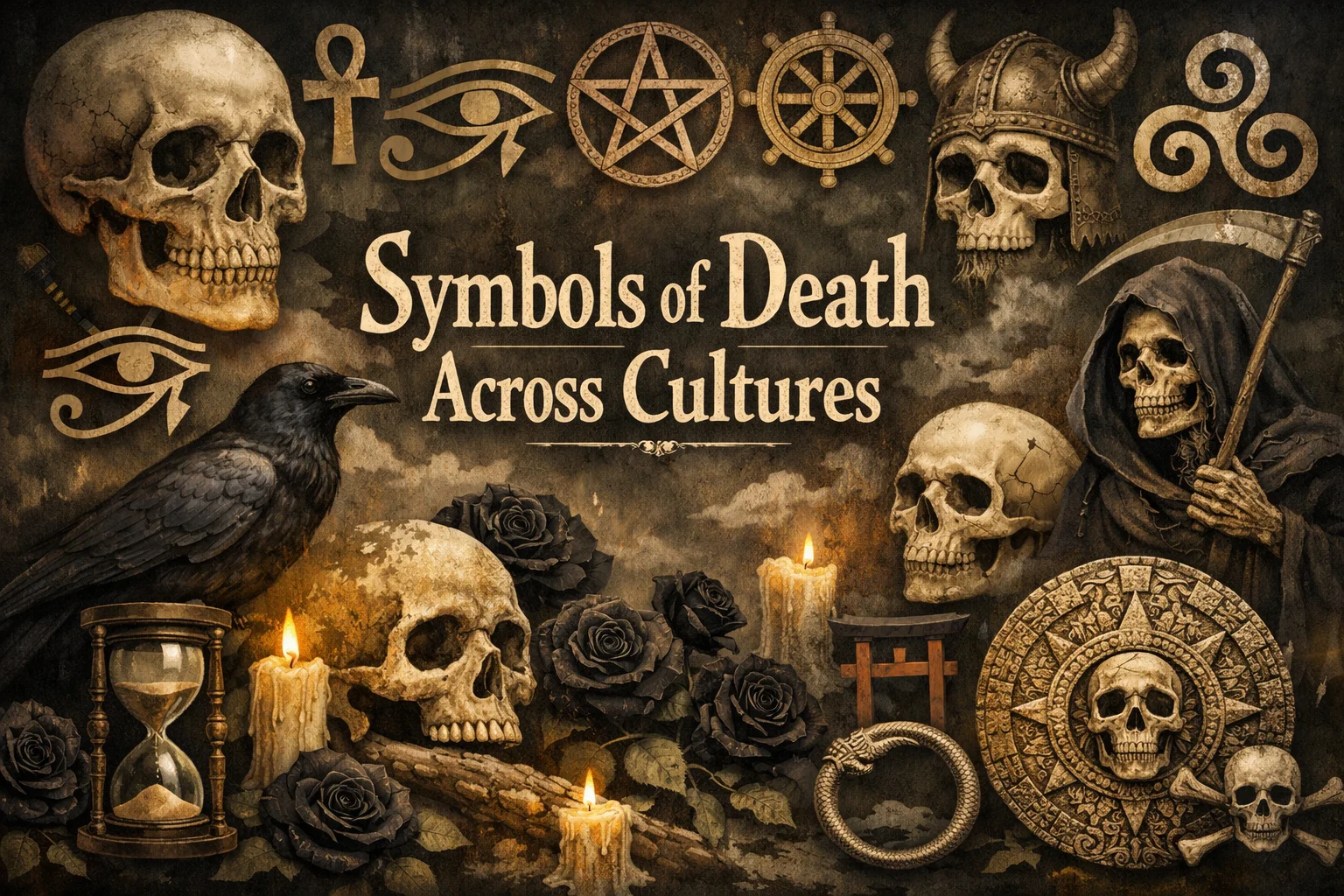
40 Symbols of Death Around the World
Below is a widely recognized collection of death symbols that appear in different cultures and traditions.
Common Global Symbols
• Skull
• Skeleton
• Grim Reaper
• Raven
• Crow
• Black rose
• Coffin
• Tombstone
• Hourglass
• Scythe
• Wilted flower
• Candle flame
• Black veil
• Funeral bell
• Ashes
• Bones
• Crossed bones
• Dead tree
• Obsidian mirror
• Black butterfly
Additional Cultural Symbols
• Owl in some folklore
• Moth
• Vulture
• Cypress tree
• Chrysanthemum (in parts of Europe and Asia)
• White lily
• Funeral mask
• Spirit boat
• Broken column
• Skull candle
• Shadow figure
• Shroud cloth
• Black ribbon
• Ghost figure
• Funeral drum
• River crossing symbol
• Underworld gate
• Death deity icon
• Grave mound
• Empty chair
Many of these symbols overlap across cultures, but their meanings can vary widely.
Meaning of Death Symbols in the United States
In the United States, death symbolism often blends European, Christian, and global traditions.
However, modern interpretations are usually less literal than in the past.
Modern American Interpretations
Many Americans associate death symbols with themes like:
• Life’s fragility
• Respect for ancestors
• Gothic aesthetics
• Halloween imagery
• Artistic rebellion
• Spiritual reflection
For example, skull imagery can symbolize mortality but also celebration of life. This influence partly comes from Mexican Day of the Dead traditions.
Table: Common Death Symbols and Their Meanings
| Symbol | Meaning in the USA | Common Associations | Notes |
| Skull | Mortality and remembrance | Tattoos, art, Halloween | Often linked to “memento mori” ideas |
| Raven | Mystery and death omens | Gothic literature | Popular in horror and poetry |
| Hourglass | Time running out | Philosophy and memorial art | Represents life’s limits |
| Black Rose | Mourning or farewell | Gothic fashion | Symbolic rather than botanical |
| Skeleton | Equality in death | Halloween decor | Medieval symbolism revived |
These interpretations show how old symbols adapt to modern culture.
Spiritual Meaning of Death Symbols
Many traditions treat death symbols as spiritual tools rather than dark imagery.
In religious contexts, they often remind believers of the soul’s journey.
Symbolism in Spiritual Traditions
Common spiritual interpretations include:
• Death as transformation rather than ending
• Passage into another spiritual realm
• The cycle of rebirth and renewal
• Judgment or moral reflection
• Connection with ancestors
These meanings appear in Christianity, Buddhism, Hindu traditions, and indigenous spiritual beliefs.
However, modern American readers often interpret them more metaphorically.
Animals That Symbolize Death
Animals frequently appear in death symbolism because they move between natural environments linked with mystery or darkness.
Common Animal Death Symbols
• Ravens linked with battlefields and prophecy
• Crows associated with omens in folklore
• Owls connected to night and hidden knowledge
• Vultures representing decay and the cycle of nature
• Moths drawn to light and darkness
In American culture, many of these associations come from European folklore and literature.
Edgar Allan Poe’s famous raven, for example, helped shape the bird’s eerie reputation in modern storytelling.
Also Read This: Slug Spiritual Meaning and Symbolism
Plants and Flowers Associated With Death
Plants often symbolize death because they reflect natural cycles of life and decay.
Some flowers became connected to funerals or mourning rituals.
Common Funeral Plants
• White lilies symbolizing restored innocence
• Chrysanthemums used in memorial ceremonies
• Black roses representing farewell or tragic love
• Cypress trees planted in graveyards
• Wilted flowers symbolizing life’s fragility
In the United States, lilies remain one of the most common funeral flowers.
Psychological Meaning of Death Symbols
Beyond culture and religion, death symbols also have emotional meanings.
Psychologists often view them as ways people process difficult ideas about mortality.
Emotional Associations
These symbols may represent:
• Fear of death
• Acceptance of life’s limits
• Reflection on legacy
• Transformation and personal change
• The passage of time
Interestingly, many people are drawn to these symbols during major life transitions.
This is why skull tattoos or hourglass imagery often appear during periods of personal growth.
Death Symbols in Modern Pop Culture
Today, death symbolism is everywhere in media and entertainment.
Movies, music, and fashion often borrow these images for dramatic effect.
Common Pop Culture Uses
• Gothic clothing and jewelry
• Heavy metal and rock imagery
• Horror films and Halloween decorations
• Video games featuring underworld themes
• Street art and tattoo culture
In many cases, these symbols no longer represent literal death. Instead, they express rebellion, mystery, or emotional intensity.
Tattoos and Body Art Featuring Death Symbols
Tattoos are one of the most visible modern uses of death symbolism.
People often choose these designs for deeply personal reasons.
Popular Tattoo Designs
• Skull tattoos symbolizing mortality
• Raven tattoos representing mystery or wisdom
• Hourglass tattoos showing time and fate
• Skeleton figures linked to life cycles
• Black rose tattoos symbolizing grief or transformation
For many Americans, these tattoos represent the idea: remember that life is temporary.
This concept traces back to the Latin phrase memento mori, meaning “remember you must die.”
Misunderstandings and Controversies Around Death Symbols
Not all death symbols are universally understood. Some meanings shift dramatically across cultures.
Common Misinterpretations
• Owls symbolize wisdom in the U.S., but death in some cultures
• Skulls can represent celebration in Mexican traditions
• Ravens may symbolize prophecy rather than death
• Black flowers are symbolic, not natural species
• Some ancient symbols are mistaken for dark or evil imagery
Context matters greatly when interpreting these images.
A symbol that seems frightening in one culture may represent protection or wisdom in another.
How Death Symbolism Has Changed Over Time
Historically, death symbols were used primarily in religious or funerary settings.
However, their meanings evolved as societies changed.
Major Shifts
• Medieval art used death imagery to teach moral lessons
• Victorian culture used elaborate mourning symbolism
• Modern culture treats many symbols as aesthetic motifs
• Social media revived interest in gothic symbolism
• Tattoos transformed ancient imagery into personal statements
Because of these shifts, many symbols today carry multiple meanings at once.
Why People Are Fascinated by Death Symbols
Death is one of life’s greatest mysteries. Symbols help people explore it safely.
These images create a language for discussing difficult ideas.
Reasons for Their Popularity
• Curiosity about the afterlife
• Desire to honor loved ones
• Artistic fascination with darkness
• Cultural traditions and rituals
• Personal reflection on life’s meaning
Instead of focusing only on fear, many people see these symbols as reminders to live fully.
FAQs
What is the most common symbol of death?
The skull is probably the most recognized symbol of death worldwide. It represents mortality because it is the visible structure that remains after life ends.
Why are ravens connected with death?
Ravens historically appeared on battlefields and near carrion. Because of this, many cultures linked them with omens, prophecy, or the spirit world.
Do skulls always symbolize death?
Not always. In modern culture, skulls can symbolize remembrance, equality in death, or celebration of life.
What flower represents death?
White lilies are commonly used in American funerals. Chrysanthemums represent death or mourning in parts of Europe and Asia.
Why do people get death symbol tattoos?
Many people choose them as reminders that life is temporary. Others see them as symbols of transformation or survival after hardship.
Are death symbols always negative?
No. Many traditions view them as symbols of rebirth, spiritual transition, or honoring ancestors.
Conclusion
Symbols help humans express ideas that words often struggle to capture. Death, perhaps more than anything else, inspired a rich language of imagery across cultures.
The 40 Symbols of Death Around the World reflect thousands of years of beliefs, fears, and spiritual ideas. Some began in ancient mythologies. Others came from funeral traditions or folklore.
Today in the United States, these symbols often carry layered meanings. A skull might represent mortality, remembrance, or artistic identity. A raven might evoke mystery instead of fear.
Ultimately, these images remind us of something universal: life is temporary, memory is powerful, and every culture searches for ways to understand the journey between them.