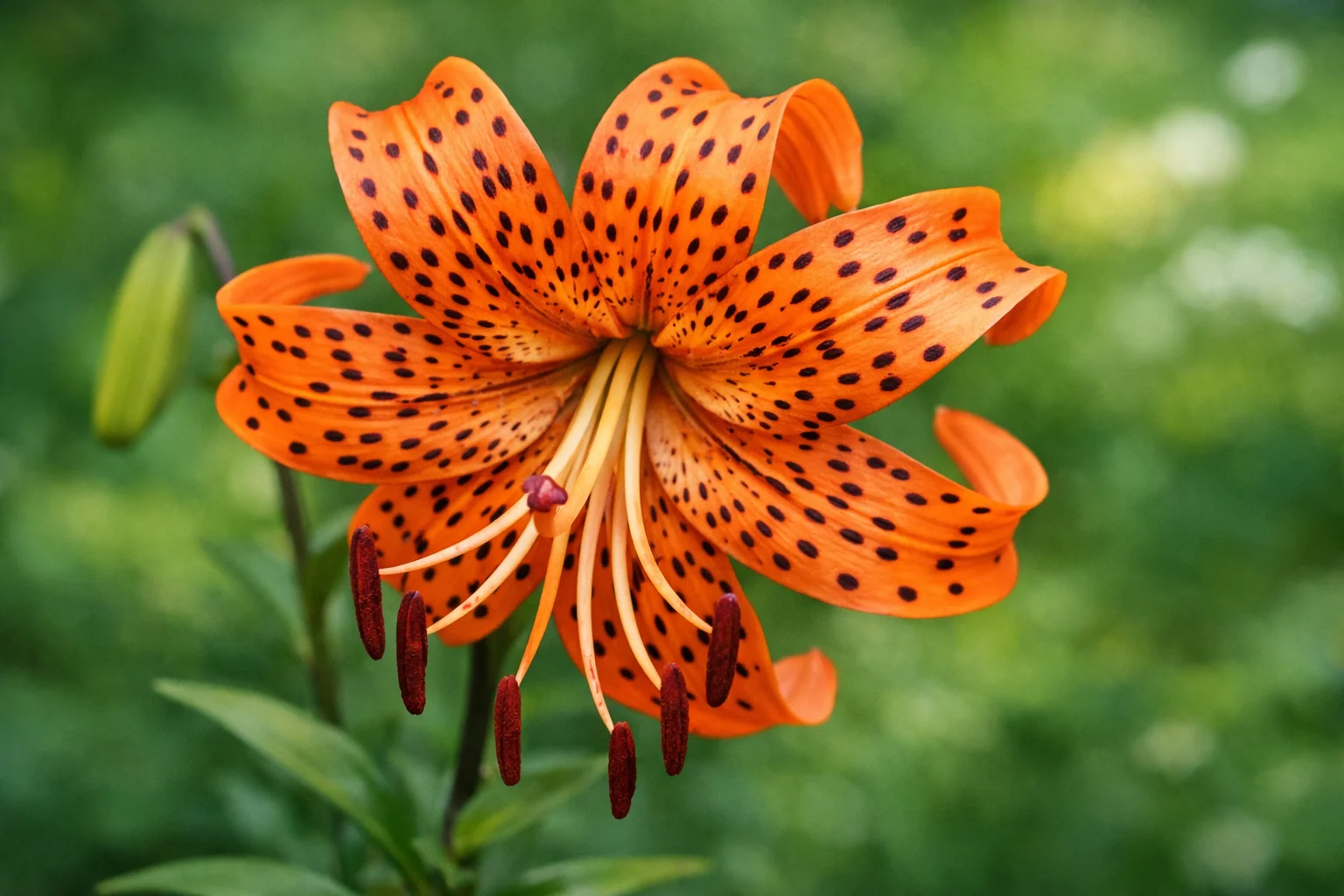
Tiger lilies are striking flowers, instantly recognizable by their bright orange petals adorned with bold spots. Beyond their visual appeal, tiger lilies carry deep symbolic and spiritual significance. In the United States, they are often associated with confidence, pride, and positivity, appearing in gardens, art, and celebrations. Their unique shape and fiery color make them a symbol that captures attention and conveys meaning without words.
Throughout history, tiger lilies have been more than ornamental plants—they have served as emblems of strength, wealth, and protection in various cultures. In the USA, they blend natural beauty with emotional resonance, often representing personal empowerment, ambition, and independence. Understanding the tiger lily’s symbolism allows us to appreciate its presence in both traditional and modern contexts, from floral arrangements to tattoos and home décor.
Quick Answer
The tiger lily symbolizes confidence, wealth, and pride in the USA. Across cultures, it also represents courage, protection, and prosperity. Its bold color and form convey strength and ambition in modern usage.
TL;DR
• Tiger lilies symbolize confidence, pride, and personal strength in the USA.
• Historically, they were valued for protection and wealth in ancient traditions.
• The flower is associated with courage and ambition across cultures.
• Modern uses include tattoos, home décor, and celebratory arrangements.
• Misinterpretations are rare but occasionally involve confusing it with other lilies.
• Its symbolism has evolved while retaining connections to empowerment and positivity.
Overview of Tiger Lily
Tiger lilies are large, trumpet-shaped flowers with upward-curving petals. Their distinctive orange color, often accented with dark spots, makes them stand out in gardens and floral designs.
Appearance and Context
• Bright orange petals with brown or black spots.
• Long, slender stamens extending outward.
• Often grows in clusters, creating a dramatic effect.
• Found in gardens, floral bouquets, and sometimes as ornamental wildflowers.
These visual features contribute to its symbolism: vividness, energy, and resilience. The flower’s upward posture is often interpreted as striving or aspiration, aligning with its meaning in contemporary American culture.
Historical Background
The tiger lily’s roots trace back to ancient Asia, particularly China and Japan, where it was cultivated both for beauty and medicinal purposes.
Ancient Symbolism
• In China, orange lilies represented wealth and abundance.
• Japanese culture linked tiger lilies to protection and positive energy.
• Early herbal texts noted their use in remedies, linking the plant to health and vitality.
European Introduction
• Introduced to Europe in the 18th century, quickly adopted in gardens.
• Victorian symbolism: represented pride and confidence, reflecting its bold color.
• By the 19th century, it reached the United States, where gardeners prized it for its hardiness and vibrant hue.
The tiger lily’s journey from Asia to the USA illustrates how cultural symbolism can evolve while maintaining key themes of strength and beauty.
Symbolism in the USA
In contemporary American culture, the tiger lily conveys multiple layers of meaning.
Core Meanings
• Confidence and pride – Its bold color encourages self-expression.
• Prosperity and ambition – Often used in celebrations and awards.
• Independence and resilience – Grows well in challenging conditions, symbolizing perseverance.
• Optimism and positivity – Bright orange evokes warmth and energy.
Cultural Presence
Tiger lilies appear in gardens, bouquets, and public parks, often used in spring and summer festivals. They are a symbol of personal empowerment, appearing in art, photography, and social media as a metaphor for standing out.
| Context | Meaning in the USA | Common Associations | Notes |
| Home Gardens | Confidence, warmth | Pride in cultivation | Often used as centerpiece flowers |
| Tattoos | Strength, independence | Personal growth | Popular among women for empowerment |
| Celebrations | Ambition, prosperity | Graduations, awards | Chosen for visual impact and symbolism |
| Public Art | Boldness, resilience | City murals, floral installations | Represents energy and vitality |
Cross-Cultural and Spiritual Meanings
While the USA emphasizes confidence and pride, the tiger lily carries spiritual significance worldwide.
Asian Traditions
• China: Wealth, prosperity, and familial harmony.
• Japan: Protection, good fortune, and spiritual balance.
Western Symbolism
• Victorian England: Pride, wealth, and refined taste.
• Modern spiritual practices: Courage, empowerment, and personal growth.
This cross-cultural perspective reinforces that the tiger lily’s message of strength and positivity resonates globally, even as regional interpretations differ.
Also Read This: Grey and Black Feather Meaning: Spiritual and Symbolism
Emotional and Psychological Associations
Tiger lilies evoke strong emotional responses due to their color and shape.
Feelings and Mindset
• Energy and motivation – Orange stimulates excitement and action.
• Confidence and pride – Bold petals suggest standing out.
• Courage – Its resilience reflects personal strength.
• Positivity – Inspires joy, optimism, and creativity.
People often gift tiger lilies to express admiration or support, signaling encouragement and recognition of someone’s abilities.
Modern Usage
Today, tiger lilies are more than symbols—they are tools for personal expression and artistic design.
Common Applications
• Tattoos: Represent strength, independence, and personal growth.
• Social Media: Used in visuals to convey positivity and ambition.
• Home Décor: Bright centerpieces, wall art, and garden arrangements.
• Holidays & Celebrations: Graduations, weddings, and milestone events.
Tiger lilies also appear in fashion and branding as a metaphor for boldness, energy, and individuality.
Misunderstandings and Controversies
The tiger lily generally maintains positive connotations, but some misinterpretations occur.
• Confusion with other orange lilies, which may carry cautionary or mourning associations.
• Rarely, tiger lilies are misused in symbolic messaging without understanding cultural origins.
• Mislabeling in tattoo symbolism—some assume all lilies mean purity, while tiger lilies emphasize pride and confidence.
Despite minor misconceptions, the flower’s symbolism remains largely celebratory and empowering in the USA.
Shifts Over Time
The tiger lily’s symbolism has evolved:
• Ancient: Wealth, health, protection.
• Victorian: Pride, boldness, aesthetic beauty.
• Modern USA: Confidence, independence, optimism.
This evolution shows how a single flower can adapt culturally while retaining core symbolic threads, making it relevant across centuries.
FAQs
What does a tiger lily represent in the USA?
It primarily symbolizes confidence, pride, and personal strength, often used in gardens and gifts.
Is the tiger lily considered lucky or unlucky?
Mostly lucky; it conveys prosperity, courage, and positive energy, though context may vary slightly.
Can tiger lilies have spiritual meaning?
Yes, globally they symbolize protection, courage, and empowerment, beyond aesthetic appeal.
Are tiger lilies used in tattoos?
Yes, they often represent independence, personal growth, and resilience.
How do tiger lilies differ from other lilies symbolically?
Unlike white lilies (purity) or yellow lilies (gratitude), tiger lilies emphasize boldness, pride, and confidence.
Conclusion
The tiger lily embodies a rich tapestry of symbolism that blends beauty, history, and emotional power. In the USA, it stands as a symbol of confidence, pride, and personal strength, while globally it conveys protection, courage, and prosperity. From gardens to tattoos, this flower reminds us that boldness and resilience can be expressed through nature. Appreciating the tiger lily’s meanings allows modern audiences to connect with both its ancient heritage and contemporary relevance, making it a truly timeless symbol.