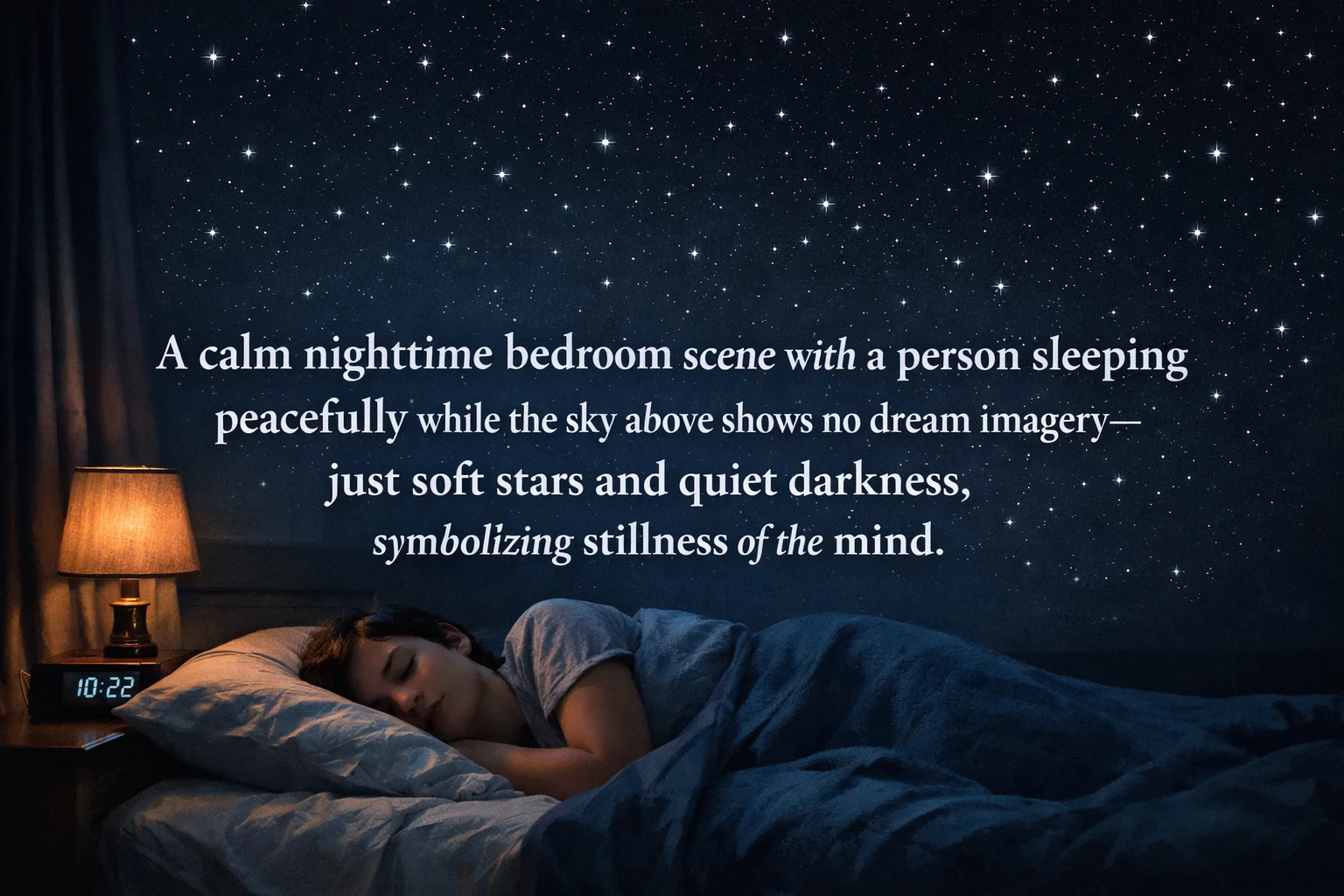
People often talk about vivid dreams, strange dreams, or recurring dreams. Yet many people say something different: they don’t dream at all. Or at least, they don’t remember dreaming. This leads many to wonder about the Symbolic and Spiritual Meaning of Not Dreaming and what it might represent.
In the United States, conversations about dreams often mix psychology, spirituality, and everyday curiosity. Some people see dreams as messages from the mind. Others view them as emotional processing during sleep. So when someone experiences long periods without dreams, it can feel mysterious or even meaningful.
Historically, dreams were seen as signs from gods, ancestors, or the subconscious mind. Because of this, the absence of dreams has also gained symbolic interpretations. Some view it as deep rest. Others connect it to emotional overload, inner silence, or spiritual grounding.
Today, the idea of not dreaming appears in wellness discussions, online forums, therapy conversations, and spiritual communities. Understanding its symbolism helps people interpret their inner world with more awareness and calm.
Quick Answer
The Symbolic and Spiritual Meaning of Not Dreaming often represents mental stillness, emotional overload, deep restorative sleep, or a period of inner quiet. In modern American interpretation, it usually reflects the mind entering deep rest rather than producing vivid dream imagery. Spiritually, some traditions see it as a state of calm awareness or spiritual grounding.
TL;DR
• Not dreaming usually means dreams aren’t remembered, not absent
• Symbolically linked to mental stillness or emotional reset
• Often associated with deep restorative sleep cycles
• Some spiritual traditions interpret it as inner quiet or grounding
• In the U.S., it’s often discussed through psychology and wellness
What Does It Mean If You Don’t Dream?
Many people assume they never dream. However, sleep research shows that almost everyone dreams during sleep. The real difference is dream recall.
Understanding this helps explain why “not dreaming” has both scientific and symbolic interpretations.
The Scientific Reality
During sleep, dreams usually occur in the REM (Rapid Eye Movement) stage. However, if someone wakes up during deeper sleep stages instead, they may not remember any dreams.
Common reasons people report not dreaming include:
• Waking during deep sleep instead of REM sleep
• Stress or mental fatigue reducing dream recall
• Sleep medication affecting REM cycles
• Very deep, restorative sleep
• Lack of attention to dream memory upon waking
Because of this, “not dreaming” often reflects memory patterns rather than the absence of dreams.
Why People Attach Meaning to It
Despite the science, humans naturally search for symbolic meaning in sleep experiences.
People may interpret not dreaming as:
• Emotional quiet after stress
• Mental shutdown from overload
• A stable and grounded emotional state
• A subconscious pause between life transitions
These interpretations shape modern symbolic discussions.
Historical Beliefs About Dreams and Dreamlessness
Throughout history, dreams were seen as messages or signs. Because of this belief, dreamlessness also gained symbolic interpretations.
Ancient cultures often linked dreams to divine communication. If someone didn’t dream, it could be interpreted in several ways.
Ancient Perspectives
In some early traditions, dreamless sleep symbolized deep peace or spiritual protection.
Examples include:
• Ancient Greek philosophers describing dreamless sleep as the mind’s pure rest
• Early Eastern traditions viewing dreamless states as spiritual stillness
• Medieval European beliefs that quiet sleep reflected divine calm
• Indigenous traditions sometimes associating dream absence with spiritual grounding
Although interpretations differed, many cultures viewed dreamless sleep as a meaningful state rather than a problem.
Philosophical Interpretations
Some early thinkers believed dreamless sleep was closer to pure consciousness.
They argued that when the mind stops producing images, it reaches a deeper level of rest or awareness.
This idea still appears in modern spiritual discussions.
Symbolism in the United States Today
In modern American culture, the meaning of not dreaming is usually interpreted through psychology, wellness, and self-reflection.
Rather than mystical messages, most people see it as a sign of mental state or lifestyle balance.
Common American Interpretations
People in the U.S. often associate dreamlessness with:
• Emotional exhaustion after stressful periods
• Deep, restorative sleep during physical recovery
• Mental quiet after resolving a major life issue
• Burnout or cognitive overload
• A calm mind without active subconscious processing
These interpretations reflect the strong influence of psychology in American culture.
The Role of Sleep Awareness
Today, sleep tracking apps and wellness trends have increased interest in dream patterns. Many people now pay attention to sleep cycles and dream recall as part of mental health routines.
Spiritual Meaning of Not Dreaming
Beyond psychology, many spiritual traditions interpret dreamless sleep symbolically.
Instead of seeing it as empty, they view it as a state of inner silence.
Spiritual Interpretations
Some spiritual perspectives suggest dreamless states represent:
• A mind free from mental noise
• Spiritual grounding or stability
• A period of internal reset
• Protection from overwhelming subconscious imagery
• A moment of inner peace before transformation
These interpretations often appear in meditation or mindfulness discussions.
Silence as a Symbol
In many traditions, silence itself carries meaning. Dreamless sleep may symbolize the mind entering a quiet space where deeper awareness can form.
For some people, this silence feels calming rather than confusing.
Also Read This: Seeing Cheetah in Dream Meanings and InterpretationsS
Emotional and Psychological Symbolism
Dream activity often reflects emotional processing. Because of this, the absence of dreams can also carry psychological meaning.
It may signal that the brain is prioritizing rest over processing.
Emotional States Linked to Dreamlessness
Psychologists sometimes connect reduced dream recall with certain emotional patterns.
Examples include:
• Emotional burnout or fatigue
• Stress overload causing mental shutdown
• A stable emotional state with fewer subconscious conflicts
• Strong sleep cycles producing deep rest
• A temporary pause in major life transitions
However, these interpretations vary widely between individuals.
The Brain’s Recovery Mode
When the brain focuses on recovery, it may spend more time in deep sleep stages. This stage restores physical and mental energy.
As a result, dream recall may temporarily decrease.
Modern Interpretations in Wellness Culture
Today, discussions about dreams often appear in wellness spaces, therapy conversations, and online communities.
Not dreaming has become part of a broader conversation about mental health and sleep quality.
Popular Wellness Interpretations
In modern wellness discussions, dreamlessness may symbolize:
• Emotional reset after intense stress
• Nervous system recovery
• A calm mind without racing thoughts
• Sleep cycles improving after insomnia
• Deep physical recovery after illness or exhaustion
These interpretations often focus on the body’s need for restoration.
Symbolic Meanings Across Different Contexts
The meaning of not dreaming can change depending on context. The same experience may symbolize different things depending on a person’s life situation.
Below is a simplified overview.
| Context | Meaning in the USA | Common Associations | Notes |
| Deep sleep cycles | Physical restoration | Healing, body recovery | Often considered healthy |
| Emotional exhaustion | Mental shutdown | Stress, burnout | Usually temporary |
| Spiritual reflection | Inner silence | Meditation, calm awareness | Found in spiritual discussions |
| Life stability | Few internal conflicts | Peace, balance | Less emotional processing |
| Transitional periods | Mind pausing before change | Reflection, reset | May shift over time |
This shows why interpretations differ so widely.
Can Stress Cause You Not to Dream?
Stress can strongly influence sleep and dream recall. When the mind is overloaded, dream memory may become weaker.
How Stress Affects Dream Recall
Stress can lead to:
• Fragmented sleep patterns
• Reduced REM sleep recall
• Mental fatigue blocking memory formation
• Deep recovery sleep after exhaustion
Ironically, extremely high stress can also cause more vivid dreams in some people.
Because sleep varies widely, the relationship isn’t always predictable.
Cultural and Cross-Spiritual Interpretations
Different cultures interpret dreamlessness in unique ways.
Although beliefs differ, many traditions view quiet sleep positively.
Common Cross-Cultural Themes
Across cultures, dreamless sleep has been linked to:
• Spiritual stillness
• Mental purification
• Rest for the soul or spirit
• Protection from disturbing visions
• A reset between emotional cycles
While interpretations vary, the theme of quiet restoration appears frequently.
Modern Uses in Personal Identity and Reflection
In modern life, people often use dream patterns as tools for self-understanding.
Not dreaming has become a topic in journaling, therapy discussions, and online reflection communities.
Where People Discuss It Today
You’ll commonly see conversations about dreamlessness in:
• Mental health discussions
• Sleep improvement communities
• Spiritual reflection groups
• Meditation practices
• Personal growth journaling
Rather than treating it as mysterious, many people simply view it as a natural variation in sleep.
Misunderstandings and Myths About Not Dreaming
Because dreams feel mysterious, several myths have developed around dreamlessness.
Clearing up these misunderstandings helps people avoid unnecessary worry.
Common Myths
• Myth: Some people never dream at all
• Myth: Not dreaming means something is wrong
• Myth: Dreamless sleep means emotional emptiness
• Myth: Only spiritual people dream regularly
• Myth: Dream absence always signals mental problems
In reality, dream recall varies widely between individuals.
Many people simply forget their dreams quickly after waking.
How Dream Meaning Has Shifted Over Time
Interpretations of dreams have changed dramatically across history.
Ancient societies often treated dreams as divine messages. In contrast, modern psychology views them as mental processing.
Because of this shift, the meaning of dreamlessness has also evolved.
Major Shifts in Interpretation
Over time, dream interpretations moved through several stages:
• Ancient spiritual messages from gods or spirits
• Medieval religious interpretations
• Early psychological theories in the 1800s
• Modern neuroscience explanations
• Wellness-focused interpretations today
Each era added new layers of meaning.
FAQs
Is it normal to not dream?
Yes. Most people do dream, but many simply don’t remember them. Dream recall varies depending on sleep cycles and when someone wakes up.
What does it mean spiritually if you don’t dream?
Spiritually, some traditions interpret it as inner quiet or mental stillness. Others see it as a temporary pause before emotional or spiritual change.
Can stress stop you from dreaming?
Stress usually doesn’t stop dreams entirely, but it can reduce dream recall. Exhaustion may also lead to deeper sleep stages where dreams are harder to remember.
Does dreamless sleep mean better sleep?
Often, yes. Deep sleep stages are very restorative for the body. However, healthy sleep usually includes several stages, including REM sleep.
Why do some people remember dreams and others don’t?
Dream memory depends on when someone wakes up and how quickly memories fade. Some people naturally recall dreams more easily.
Can meditation cause fewer dreams?
Meditation may calm mental activity, which sometimes reduces dream intensity. However, experiences vary widely between individuals.
Conclusion
The Symbolic and Spiritual Meaning of Not Dreaming is more complex than it first appears. Scientifically, most people still dream even if they don’t remember it. Yet symbolically, dreamlessness can represent deep rest, emotional quiet, or mental recovery.
In the United States today, people usually interpret not dreaming through psychology, wellness, and self-reflection. Some see it as a sign of deep sleep, while others view it as a temporary mental reset after stress or change.
Ultimately, dream patterns are highly personal. Whether dreams are vivid or absent, they reflect the mind’s ongoing effort to restore balance. Instead of worrying about dreamlessness, many experts suggest focusing on overall sleep quality and emotional well-being.