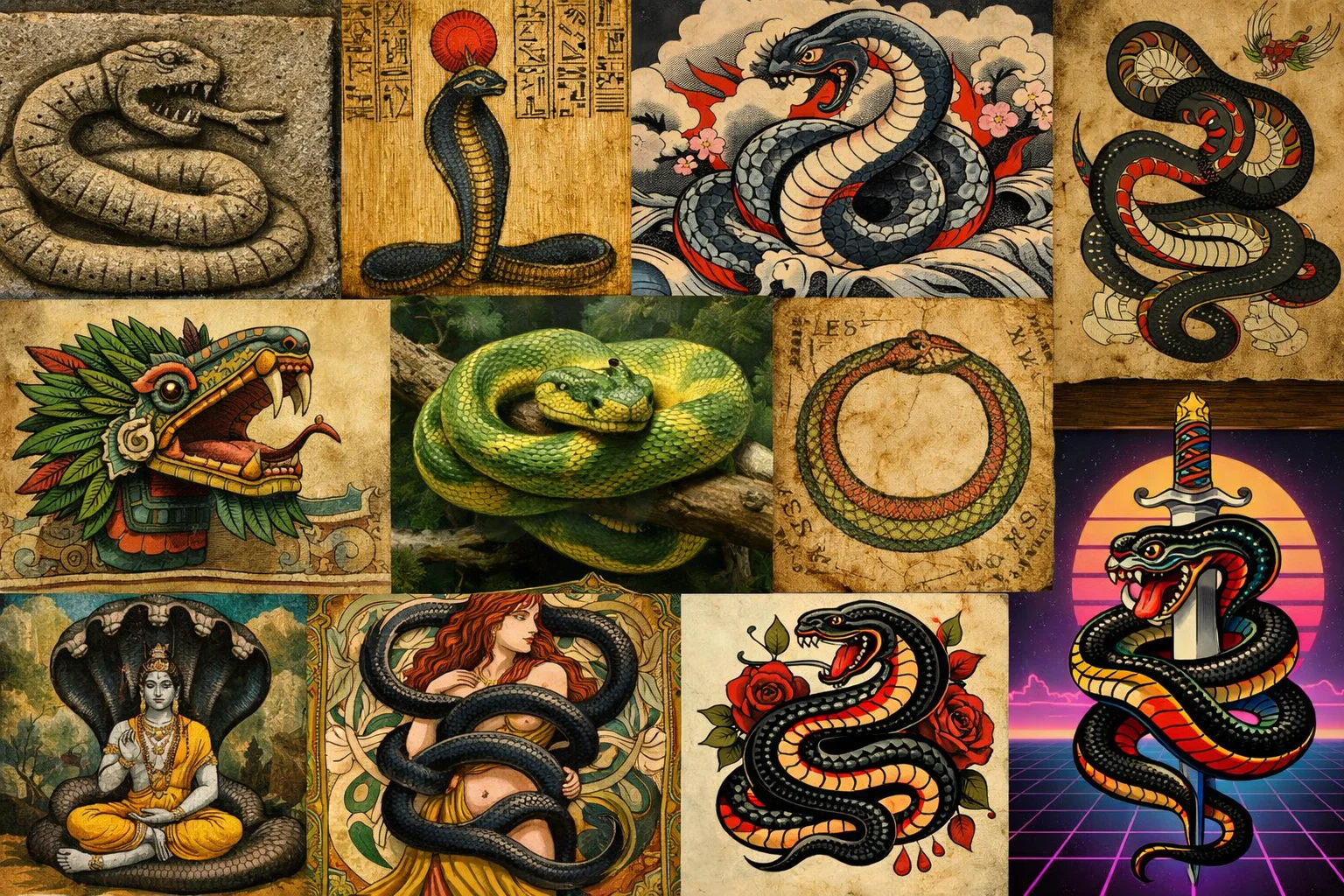
Snakes appear again and again in art, from ancient carvings to modern murals. Their forms are simple, yet their meanings feel endless. Because of that, Snake Symbolism and Their meanings in the Art remains one of the most debated and reused symbolic themes in visual culture.
In the United States, snakes often trigger strong reactions. Some people see danger or evil. Others see rebirth, wisdom, or independence. Artists use snakes because viewers already bring emotional baggage to the image.
Today, snakes show up everywhere—tattoos, protest art, album covers, home decor, and digital design. To understand why, it helps to look at where snake symbolism began, how it changed, and how Americans read it now.
Quick Answer
Snake Symbolism and Their meanings in the Art usually represent transformation, danger, hidden knowledge, or renewal. In the USA, snakes often signal independence, rebellion, or warning, shaped by history and media. Older spiritual meanings still influence how people interpret snake imagery today.
TL;DR
• Snakes symbolize transformation, danger, wisdom, and rebirth
• Meanings come from ancient myth, religion, and nature
• American symbolism emphasizes warning, freedom, and rebellion
• Modern art uses snakes to provoke emotion and identity
• Meanings shift based on context, pose, and cultural memory
Understanding Snake Symbolism in Art
Snakes are visually striking and emotionally charged. This section explains what makes them powerful symbols, especially for American viewers.
Artists don’t use snakes randomly. Every curve, color, and setting shapes how the symbol is read.
Visual Traits That Shape Meaning
• Coiled snakes suggest tension, defense, or stored power
• Shedding skin signals renewal and personal change
• Open mouths imply threat, warning, or protection
• Still snakes can suggest wisdom or hidden knowledge
• Bright colors often emphasize danger or visibility
Because snakes move without limbs, artists often use them to represent forces beyond human control.
Ancient Origins of Snake Symbolism
Long before modern art, snakes carried meaning across ancient civilizations. These early ideas still echo today.
Snakes were feared, respected, and sometimes worshipped.
Pre-Christian and Ancient Meanings
• Ancient Egypt linked snakes to royalty and protection
• Greek traditions tied snakes to healing and medicine
• Mesopotamian art showed snakes as guardians of sacred knowledge
• Indigenous cultures saw snakes as earth-connected spirits
The snake’s ability to shed skin made it one of the earliest symbols of rebirth.
Snake Symbolism in Religious Art
Religion deeply shaped how snakes appear in art, especially in Western traditions. These meanings strongly affect American interpretations.
Over time, religious symbolism narrowed the snake’s image.
Biblical Influence on Western Art
• The snake represents temptation in the Garden of Eden
• It becomes associated with deception and moral testing
• Medieval art emphasized snakes as spiritual danger
• This framing influenced European and American art traditions
Because the U.S. inherited much of its visual language from Europe, these ideas remain influential.
What Snakes Symbolize in American Art and Culture
In the United States, snake symbolism blends fear, independence, and defiance. History plays a major role here.
American artists often use snakes to make statements.
National and Historical Influences
• The rattlesnake symbolized resistance during the American Revolution
• “Don’t Tread on Me” imagery framed snakes as defenders
• Western frontier art linked snakes to untamed nature
• Modern art uses snakes to challenge authority or norms
In the U.S., snakes are often active symbols, not passive ones.
Emotional and Psychological Meaning of Snakes
Snakes trigger instinctive reactions. That emotional impact is why artists keep using them.
Psychology helps explain the symbol’s staying power.
Common Emotional Associations
• Fear due to evolutionary survival instincts
• Curiosity because snakes move unpredictably
• Respect for their quiet strength
• Discomfort mixed with fascination
Artists use snakes to bypass logic and reach emotion fast.
Snake Symbolism Across Different Art Contexts
Meaning changes depending on how and where the snake appears. Context always matters.
The same snake can tell very different stories.
Contextual Meanings in Art
• Nature scenes emphasize survival and balance
• Abstract art uses snakes as energy or flow
• Political art frames snakes as warning or resistance
• Personal art focuses on growth or inner conflict
Viewers often project their own experiences onto the image.
Cross-Cultural Snake Meanings That Influence Art
American artists borrow heavily from global traditions. These meanings quietly shape modern visuals.
They add depth beyond Western interpretations.
Global Symbolic Threads
• Hindu art links snakes to cosmic energy
• East Asian traditions associate snakes with intuition
• African symbolism connects snakes to ancestry and earth
• Mesoamerican cultures saw snakes as divine messengers
These ideas appear in American art through fusion styles and symbolism.
Modern Uses of Snake Symbolism in Art
Today, snake imagery is everywhere. Its meaning depends on who uses it and why.
Modern artists adapt old symbols for new audiences.
Where Snakes Appear Today
• Tattoo art symbolizing transformation or strength
• Street art expressing rebellion or warning
• Fashion graphics signaling danger or confidence
• Digital art using snakes as identity markers
In social media, snake imagery often signals boldness or nonconformity.
Table: Snake Symbolism in Different U.S. Art Contexts
| Context | Meaning in the USA | Common Associations | Notes |
| Revolutionary art | Resistance | Freedom, warning | Rooted in colonial history |
| Tattoo culture | Transformation | Rebirth, survival | Highly personal meaning |
| Political art | Caution or protest | Power, threat | Often controversial |
| Spiritual art | Inner change | Healing, awakening | Draws from global traditions |
| Pop culture | Edge or danger | Mystery, strength | Meaning shifts quickly |
Misunderstandings and Controversies Around Snake Imagery
Snake symbolism isn’t always used carefully. Misinterpretations can cause harm or confusion.
Context helps separate tradition from misuse.
Common Issues
• Assuming all snake art represents evil
• Ignoring cultural origins of certain designs
• Using snake symbols without understanding history
• Confusing spiritual symbols with political ones
Neutral explanation matters, especially in public art.
How Snake Symbolism Has Shifted Over Time
Meanings are not fixed. Snake symbolism keeps evolving with culture.
What once felt threatening may now feel empowering.
Key Shifts
• Ancient reverence shifted to moral suspicion
• American history reframed snakes as defenders
• Modern art reclaims snakes as personal symbols
• Digital culture accelerates new interpretations
Today, snake imagery often blends fear with self-expression.
FAQs About Snake Symbolism in Art
What does a snake usually symbolize in art?
Snakes often symbolize transformation, danger, or hidden knowledge. Meaning depends on posture, setting, and culture.
Why are snakes common in American tattoo art?
Many Americans see snakes as symbols of survival and personal change. Tattoos make that meaning deeply individual.
Are snakes always negative symbols?
No. While some traditions frame snakes negatively, many cultures view them as healing or wise.
Why do snakes make people uncomfortable?
Humans evolved to notice snakes quickly. That instinct still shapes emotional reactions.
Does snake color change its meaning?
Yes. Bright colors often signal danger, while dark tones suggest mystery or power.
How should snake symbolism be interpreted today?
Look at context, intention, and cultural background. Meaning is rarely singular.
Conclusion
Snake imagery has never meant just one thing. Across history, cultures, and styles, snakes have carried fear, wisdom, danger, and renewal. In the United States, those meanings blend with ideas of independence, warning, and personal transformation.
By understanding Snake Symbolism and Their meanings in the Art, modern viewers can read images more clearly. Instead of reacting on instinct alone, we can see how history, emotion, and culture shape what the snake still whispers to us today.