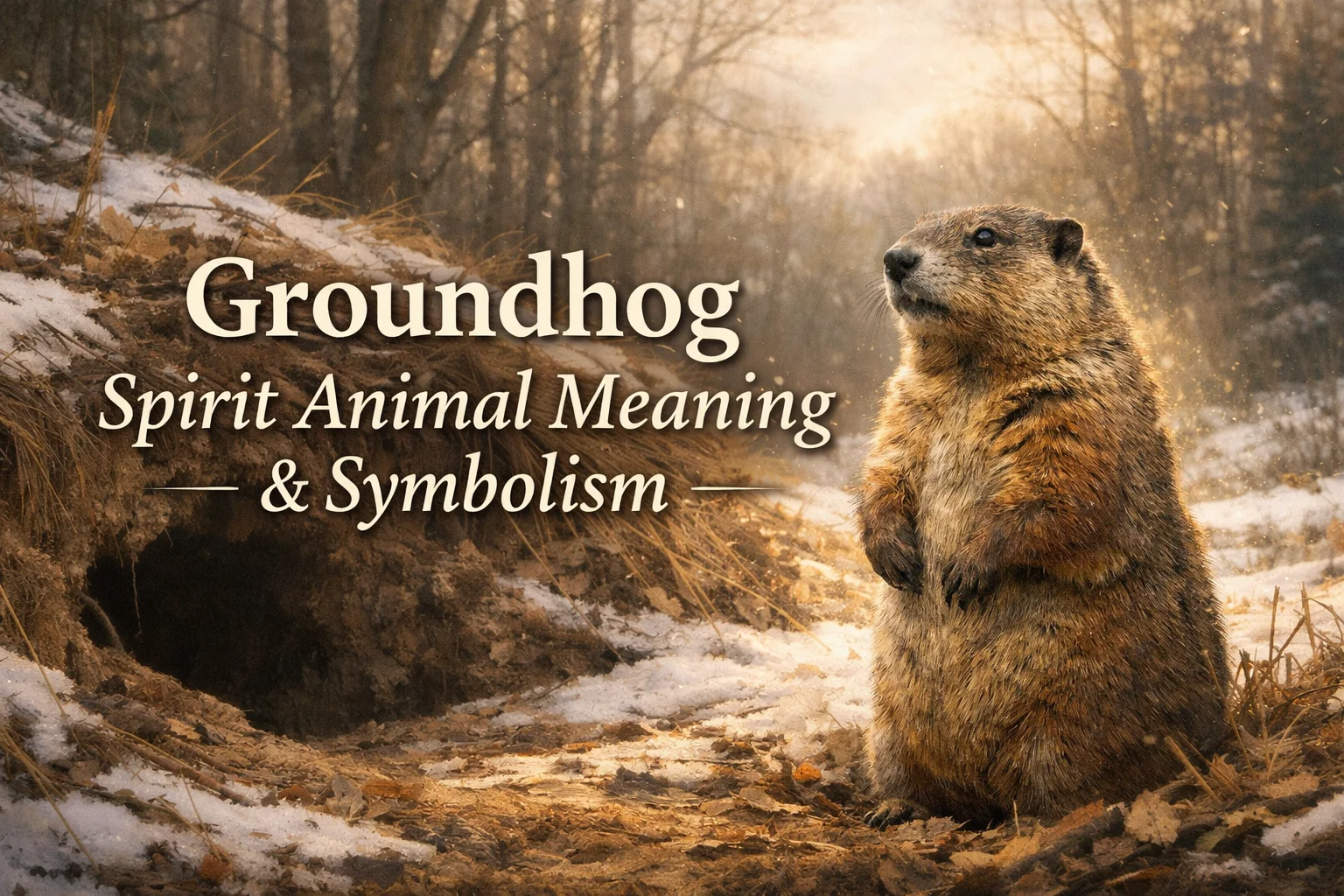
Groundhog Spiritual Meaning and Symbolism often surprise people. Most Americans know the animal from February 2, when it “predicts” the weather. However, the groundhog carries deeper meaning that reaches beyond a single holiday.
This small, burrowing mammal appears in folklore, seasonal rituals, and modern media. Because it lives underground and emerges in late winter, many people see it as a symbol of cycles, intuition, and fresh starts. In the United States especially, it blends humor with tradition.
So what does the groundhog really represent? Let’s explore its spiritual meaning, its roots in history, and why it still matters today.
Quick Answer
In the United States, Groundhog Spiritual Meaning and Symbolism center on seasonal change, intuition, and renewal. The animal represents the turning of winter into spring, trust in natural cycles, and the wisdom of retreat and return. More broadly, it symbolizes patience, inner reflection, and the promise of new beginnings.
TL;DR
• Symbol of seasonal change and renewal
• Linked to intuition and natural timing
• Famous in the U.S. for Groundhog Day
• Represents retreat, rest, and re-emergence
• Connected to cycles of growth and rebirth
What Is a Groundhog? Physical Traits and Symbolic Clues
Before exploring meaning, it helps to understand the animal itself. The groundhog, also called a woodchuck, is a large burrowing rodent found across much of the United States.
Appearance and Behavior
Groundhogs have thick brown or gray fur and strong claws. They stand upright when alert. Most importantly, they hibernate during winter.
Because of these traits, symbolic interpretations often focus on:
• Burrowing underground as a form of retreat
• Emerging from darkness into light
• Fat reserves and preparation
• Alert posture suggesting awareness
In symbolic language, animals often reflect their behavior. Since the groundhog disappears for months, then returns, it naturally represents cycles of withdrawal and renewal.
Historical Roots of Groundhog Traditions
Although Groundhog Day feels uniquely American, its roots stretch back to Europe. Understanding this history helps clarify the deeper symbolism.
Candlemas and Seasonal Divination
Early European settlers brought traditions linked to Candlemas, a Christian feast held on February 2. In parts of Germany, people believed a sunny Candlemas meant a longer winter.
When German immigrants settled in Pennsylvania, they adapted the belief. In Europe, hedgehogs were weather predictors. In America, they chose the groundhog instead.
Over time, this evolved into the celebration associated with Groundhog Day.
Ancient Seasonal Patterns
Even earlier, pre-Christian cultures marked midwinter turning points. Festivals recognized the slow return of sunlight.
Therefore, the groundhog became part of a larger pattern:
• Midwinter reflection
• Watching nature for signs
• Divination through animals
• Trust in seasonal rhythms
The symbolism grew from observing nature, not from one single religion.
Groundhog Day and American Cultural Symbolism
In the United States, the groundhog is inseparable from February 2 celebrations. However, its meaning extends beyond weather folklore.
The Ritual in Pennsylvania
The most famous groundhog lives in Punxsutawney. There, Punxsutawney Phil emerges each year before cheering crowds.
If he sees his shadow, tradition says winter continues. If not, spring arrives early.
American Meanings
In American culture, the groundhog often symbolizes:
• Hope for spring during dark months
• Humor and shared tradition
• Community gathering
• Faith in simple rituals
Unlike heavy religious symbols, the groundhog feels lighthearted. Yet it still reflects deep ideas about time and change.
Spiritual Meaning of the Groundhog
Beyond folklore, many people interpret the groundhog spiritually. Its behavior offers rich metaphor.
Retreat and Reflection
Groundhogs spend winter underground. Spiritually, this suggests the value of retreat.
• Rest before growth
• Inner reflection before action
• Protection during harsh conditions
• Patience in waiting seasons
Because growth often follows rest, the groundhog can symbolize spiritual preparation.
Intuition and Timing
The groundhog emerges at a turning point in the year. Therefore, some see it as a sign to trust your timing.
It reminds people that nature moves in cycles, not straight lines.
Groundhog Symbolism in the USA Today
Today, Americans engage with groundhog symbolism in subtle ways. It appears in media, decor, and even personal identity themes.
Cultural Context Table
| Context | Meaning in the USA | Common Associations | Notes |
| Groundhog Day | Seasonal prediction | Hope for spring | Community ritual |
| Children’s media | Cute woodland animal | Curiosity | Educational stories |
| Spiritual discussions | Renewal and cycles | Inner wisdom | Nature-based spirituality |
| Humor and memes | Repetition and routine | “Same day again” | Pop culture influence |
The idea of repetition became stronger after the 1993 film Groundhog Day. In that story, a man relives the same day repeatedly. Because of that film, the groundhog now also represents breaking negative cycles.
Cross-Cultural and Nature-Based Meanings
Although most symbolism is American, similar themes appear elsewhere.
European Roots
German folklore linked hedgehogs to weather divination. These traditions shaped American practice.
Broader Spiritual Themes
Across nature-based spirituality, animals that hibernate often represent:
• Death and rebirth cycles
• Dormancy before transformation
• Connection to Earth energy
• Trust in seasonal wisdom
However, interpretations vary widely. Not all cultures assign the same meaning.
Emotional and Psychological Associations
Symbols often reflect feelings as much as facts. The groundhog evokes specific moods.
Emotional Signals
Because it emerges from darkness, it suggests hope. Because it hides away, it suggests protection.
Psychologically, it may symbolize:
• Breaking out of isolation
• Preparing before big changes
• Accepting life’s slow seasons
• Escaping repetitive patterns
Interestingly, the movie association adds a layer of self-reflection. Many Americans now use “groundhog day” to describe feeling stuck in routine.
Also Read This: Purple Aura Meaning: Spiritual & Symbolic Significance
Groundhog as a Power Animal or Spirit Guide
In modern spiritual circles, some people speak of “animal guides.” While this idea isn’t rooted in one single tradition, it appears in contemporary spirituality.
If someone identifies with the groundhog, it may suggest:
• You need rest before action
• You’re entering a transition phase
• It’s time to emerge confidently
• You’re learning patience
However, these interpretations are symbolic, not universal truths.
Modern Usage: Tattoos, Decor, and Media
Although groundhog tattoos are less common than wolves or eagles, they do appear.
Common Modern Uses
• Small woodland animal tattoos
• Seasonal home decor in February
• School classroom themes
• Social media memes about repetition
Because the animal looks gentle, it rarely carries aggressive symbolism. Instead, it feels approachable and earthy.
Misunderstandings and Controversies
Most groundhog symbolism is harmless. Still, there are some debates.
Animal Welfare Concerns
Some critics question whether public events stress the animals used in celebrations. Organizers often respond that the animals receive professional care.
Weather Prediction Myth
Scientifically, groundhogs cannot predict weather. However, the ritual was never meant as science. It functions as folklore and seasonal celebration.
Understanding this difference helps prevent confusion.
How Groundhog Symbolism Has Shifted Over Time
Originally, the groundhog symbolized seasonal divination. Over time, it gained new layers.
Timeline of Meaning
• European seasonal folklore
• American immigrant adaptation
• Community holiday tradition
• Pop culture repetition metaphor
• Modern spiritual renewal symbol
Today, the repetition theme is almost as strong as the seasonal one. The shift shows how symbols evolve with culture.
Groundhog Symbolism and Life Cycles
At its heart, the groundhog represents cycles.
Winter turns to spring. Retreat turns to action. Stillness turns to growth.
For Americans living in fast-paced society, this message can feel grounding. It reminds people that slowing down isn’t failure. It’s part of a rhythm.
FAQs
What does a groundhog symbolize spiritually?
Spiritually, a groundhog often symbolizes renewal, patience, and natural timing. In the U.S., it’s also linked to seasonal change and fresh starts.
Is the groundhog a good omen?
In American folklore, yes. Its appearance suggests spring is coming. Spiritually, it often represents hope and emerging from difficulty.
Why is the groundhog connected to repetition?
The connection grew after the film Groundhog Day. Since then, people use the term to describe repeating routines or life lessons.
Does the groundhog have Native American symbolism?
Some Native American traditions respect burrowing animals as connected to Earth wisdom. However, meanings vary by tribe and region.
What does it mean if you dream about a groundhog?
Dream interpretations differ. Often, it suggests you may need rest, reflection, or a fresh start.
Is Groundhog Day religious?
No. While it evolved from Christian Candlemas customs, it’s now a secular cultural tradition in the United States.
Conclusion
Groundhog Spiritual Meaning and Symbolism go far beyond a playful February tradition. While the animal predicts the weather in folklore, it also reflects deeper themes of renewal, patience, and natural timing.
In American culture, the groundhog bridges humor and hope. It reminds people that winter doesn’t last forever. It also reminds us that stepping back can be wise before moving forward.
Ultimately, the groundhog teaches a simple lesson: life moves in cycles. And sometimes, emerging at the right moment makes all the difference.